
Latency
Latency is the term used to define the amount of delay for the processing and transmission of data from one point to another.
End-to-end latency in live streaming refers to the time it takes for a live video signal to be captured by a camera, transmitted over a network, and displayed on a viewer's screen.
The term "glass to glass" refers to this production workflow from the camera lens to the moment it is displayed on a screen. End-to-end latency includes the time it takes to encode the video signal, transmit it over the network, and decode it on the viewer's device.

End-to-end latency in a live video workflow
Latency is introduced throughout the entire broadcast chain. The delay can vary depending on many factors, including the technology being used, the software implementation, and how the production and transmission equipment is configured. Reducing latency is critical for live events to minimize the gap between the action and the viewer's experience.
Latency introduced in video streaming
Before the introduction of low-latency formats and optimized software architectures, a typical OTT streaming platform would introduce 40+ seconds of delay from source to playback.
With the latest improvements in MK.IO, the delay from encoding to playback has been reduced to 25 seconds. Additional enhancements are in development, utilizing standardized low-latency streaming to further reduce this delay.
Delay in the encoder
The delay in the Live Encoder is the sum of the delay necessary for decoding, encoding, and output.
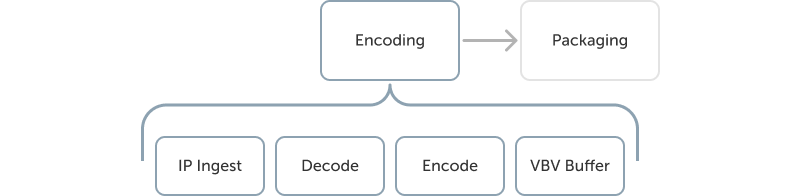
Latency overview in the encoder
At the input of the live encoder, an IP input buffer compensates for network jitter and out-of-order packets. The input is then decoded, with the duration varying based on the format.
Delay in the packager
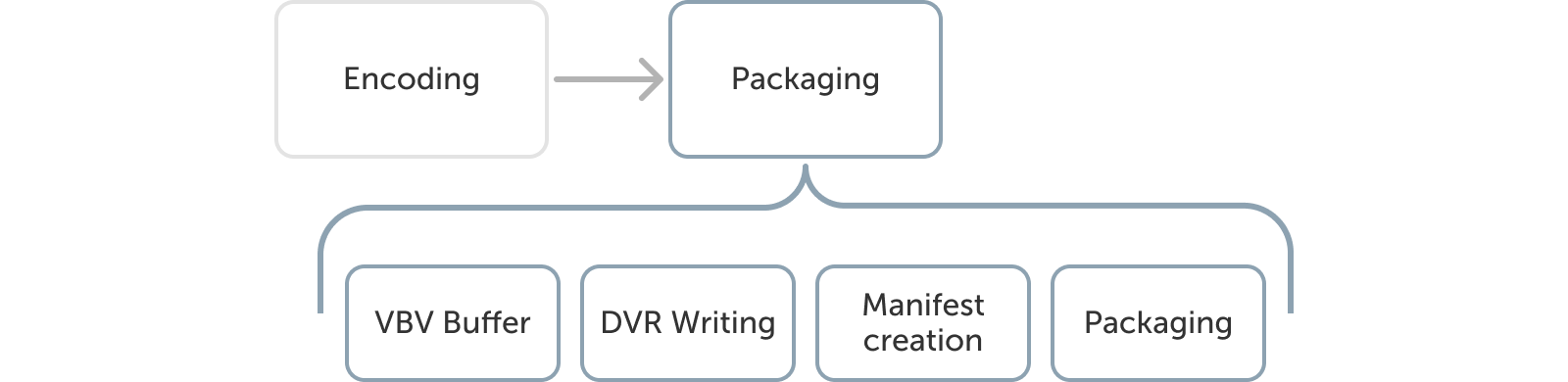
Latency overview in the packager
Content is first written to the DVR before being packaged and played out. CMAF chunks are issued as soon as they are completed by the Just-In-Time Packager (JITP). The packaged output cannot be delivered until the Manifest is generated and delivered to the player.
Delay introduced at player level
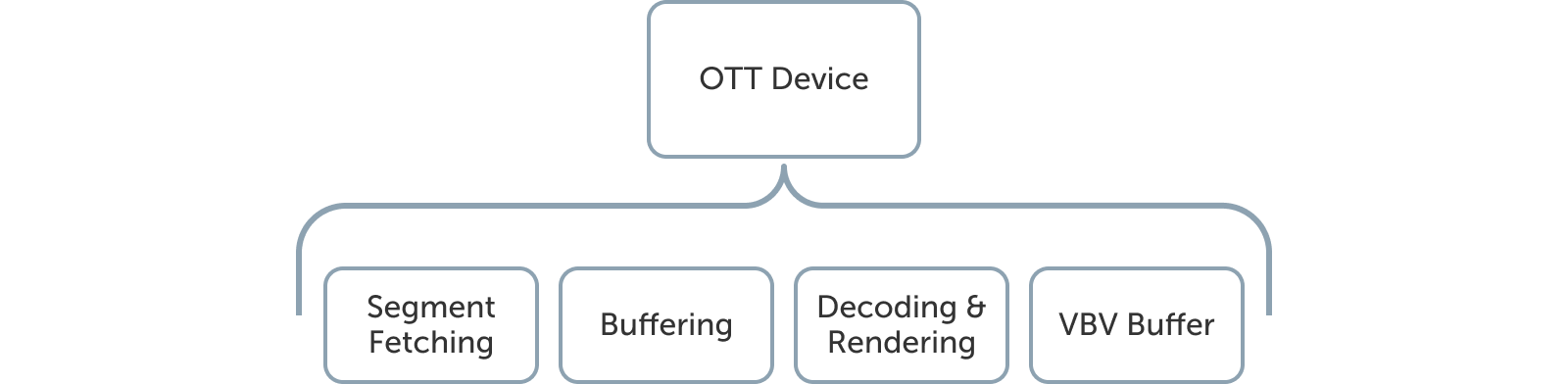
Latency overview in the player
The player fetches video segments over the network (each several seconds long). To ensure a smooth experience, the player typically waits until it has multiple segments before beginning playback to prevent interruptions from network fluctuations. Finally, the player decodes and renders the video frames and audio samples.